Mukhi’s moment: 1st cheetah cub born in India holds hope for conservation efforts | Bhopal News
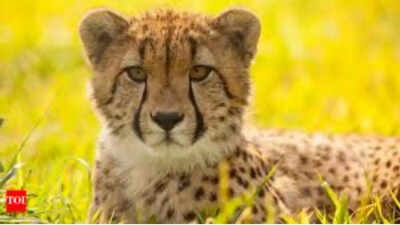

BHOPAL: Seventy years after cheetahs disappeared from India, the species is not only back but breeding — and one cub, Mukhi, has become the unlikely mascot of a global conservation experiment. Mukhi – the first cub born on Indian soil after the cheetahs were brought in from Namibia under Project Cheetah in 2022 — survived after losing her siblings in a heatwave and being abandoned by her mother. As Project Cheetah turns three on Wednesday, Mukhi – born on Mar 29, 2023, in Kuno National Park to Namibian transplants Jwala and Shaurya — stands at the centre of a remarkable milestone: 17 Indian-born cubs in just three years.Forest officials said the programme has not only stabilised but shown clear signs of success — led by Mukhi, the first cheetah cub born on Indian soil. Mukhi’s survival story, officials say, has become the defining image of a global conservation experiment that began with the reintroduction of African cheetahs to India in 2022.“Mukhi is now thriving. Her good health and independence are indicative of the excellent care she is receiving from Kuno’s veterinarians and field staff. Their management skills were developed quickly on a steep learning curve, which is most impressive,” said Susan Yannetti of South Africa-based The Metapopulation Initiative, played a key role in the translocation of cheetahs to India and is central to Project Cheetah.Mukhi survived despite losing three siblings to a deadly heatwave and maternal abandonment. “When one deals with a live biological entity, all kinds of risks are involved. She carried all those risks,” Project Cheetah field director Uttam Sharma said.Sharma said Mukhi was found “quite weak and exhausted” when picked up by the medical team on May 23, 2023. “Management takes a consensual decision on every important aspect for the betterment of the animal, after taking cognizance of the facts and situation at hand,” he said.Mukhi was hand-reared under strict protocols. “She was kept in a standard enclosure, and all protocols in this regard were followed,” Sharma said, adding that veterinary staff “played the most crucial role” in ensuring her recovery.Mukhi was later presented to her mother Jwala, but she was rejected. “Later when reunification with her mother Jwala was attempted, her mother did not accept her. She faced every challenge that an orphan newborn cub could have faced. In addition, she got injured and had to go through a long period of treatment. But it has made her a true survivor in every adverse situation. She has learned hunting on her own and is progressing exceedingly well,” Sharma said.Calling Mukhi “the symbol of courage and hope,” Sharma said her story gave strength to managers, vets, and field staff. “The biggest lesson is never to give up. On the technical side, every aspect of cheetah management in the past three years taught us something new and added to the understanding of everyone, experienced or inexperienced,” he said.Officials said Monday evening also brought the first recorded clash between a leopard and a cheetah since the project’s launch. A 20-month-old female sub-adult — one of Jwala’s four cubs released on Feb 21 — was found dead around 6.30 pm, reportedly after a territorial fight with a leopard. “She had separated from her mother over a month ago and from her siblings a few days earlier. Preliminary assessment points to a territorial clash with a leopard as the cause of death. A post-mortem examination will confirm the details,” an official release of the MP forest department said.Despite the setback, the forest department said Kuno now hosts 25 cheetahs — nine adults (six females and three males) and 16 India-born individuals — all healthy and doing well. The National Tiger Conservation Authority (NTCA) and Madhya Pradesh forest department are expected to review the next phase of the action plan later this month.Forest officials added that every step of Mukhi’s care has been documented to serve as a reference for future interventions. “We have recorded every aspect of it,” Sharma said, noting her case may guide conservationists worldwide.