Celebrating 250 years of Lucknow’s legacy: Paan daan; box blending guftgoo & mehman nawazi | Lucknow News
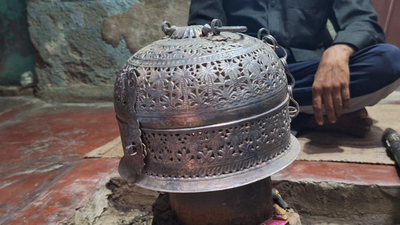

‘Paan kahta hai ki main sookh ke mar jaoonga. Ai lab-e-yaar agar tu ne na chooma mujhko’. (The betel leaf says it would wither away, unfulfilled, if not kissed by its lover’s lips.) This evocative verse of historian Nadeem Hasnain captures the essence of Lucknow’s iconic paan, an integral part of the city’s renowned mehman nawazi.In the old world Lucknow, as paan daan opened, the conversations would flow, accompanied by rounds of paan, creating a sense of connection and warmth.Rooted in ancient Hindu tradition, where the paan leaf is revered as auspicious, its significance has endured through the ages. Paan is an essential component of social and familial celebrations, symbolizing love, respect, and togetherness. During the Nawabi era, paan became an indispensable part of grand feasts and festivities.The Nawabi paan daan was not just a repository of betel leaves, but also a treasure trove of tawannai ke nuskhe (male potency-enhancing prescriptions) and other aphrodisiacs. As mentioned in the Kamasutra, betel leaf preparations played a significant role in courtship and lovemaking, further highlighting the cultural importance of paan in Indian tradition. According to historians, paan daan is an ornate container and was often made of brass or silver, with multiple compartments. These compartments are traditionally filled with the various ingredients for making paan.The art of crafting the perfect paan was a nuanced affair, with each element meticulously prepared and stored in a beautifully crafted khaasdan. The lower tier of the paan daan boasted an array of tiny containers, each holding a distinct ingredient — catechu (kattha), edible lime (chuna), betel nuts (supari), and more.The preparation of paan was an art form in itself. A delicate layer of edible lime was essential, while the sarauta skillfully sliced the betel nuts into tiny pieces. As the ingredients converged, the paan took shape, a symphony of flavours and textures.In the realm of Awadhi hospitality, paan was more than just a gesture — it was a mark of respect. Guests would acknowledge the offering with a gracious adaab.Interestingly, some variations of the traditional paan daan included a dedicated space for cigarettes.Zafar Khan, 80, a businessman in Aminabad, says, “My wife would carry it everywhere, and it was more than just a container for betel leaves — it was her treasure trove. Inside, she’d store not only paan ingredients but also her savings.”