Ammonia, SO2, NO2: The invisible air-borne killers stalking the city | Lucknow News
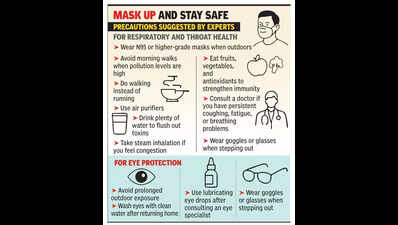

Lucknow: The city is facing a growing air pollution crisis — not only from particulate matter (PM2.5 and PM10) dust particles but also from harmful gases like ammonia, sulfur dioxide (SO₂), and nitrogen dioxide (NO₂) — which are triggering a rise in respiratory, nervous system, and eye-related ailments. Experts have warned that these toxic gases pose serious health risks, especially for morning walkers, patients with COPD, asthma, and tuberculosis, as well as the elderly, pregnant women, and diabetics.Doctors at KGMU, Lokbandhu Hospital, Ram Manohar Lohia Institute of Medical Sciences (RMLIMS), and Balrampur Hospital said prolonged exposure to these gases can damage the lungs, cause airway inflammation, irritate the eyes and throat, and worsen asthma symptoms. Long-term exposure may also increase risk of heart and respiratory diseases and affect nervous system.Prof Darshan Bajaj from KGMU’s department of pulmonary medicine said, “PM2.5, PM10, and these gases can increase upper respiratory infections. Even in small concentrations, they can cause lung edema, a serious condition.” Prof Ajay Kumar Verma, head of the department of respiratory medicine at RMLIMS, said, “Elderly are more vulnerable because their immunity is low. PM2.5 and PM10 particles reach the deeper parts of the lungs, causing inflammation and infection.” At Lokbandhu Hospital, medical superintendent Dr Ajay Tripathi said, “We have seen a rise in respiratory infection cases over the past few weeks — from about 40 a day to nearly 70 now. Throat irritation and eye redness have also become more common.” He advised patients with asthma or chronic lung diseases to avoid early morning outdoor exposure.Dr M H Usmani, dermatologist at Balrampur Hospital, said, “These gases mix with moisture in air and cause a burning sensation in the eyes and throat. People with sensitive skin may develop painful allergies and irritation.” Prof Siddharth Agrawal from KGMU’s ophthalmology department said washing eyes with clean water and wearing goggles while going out can help reduce impact.ENT specialist Dr Rakesh Srivastava said, “Sensitive groups such as the elderly, asthmatics, and those with heart or lung disease should avoid outdoor activity during high pollution hours.”