Crowning Glory: Lucknow’s Capital March Turns 250 | Lucknow News
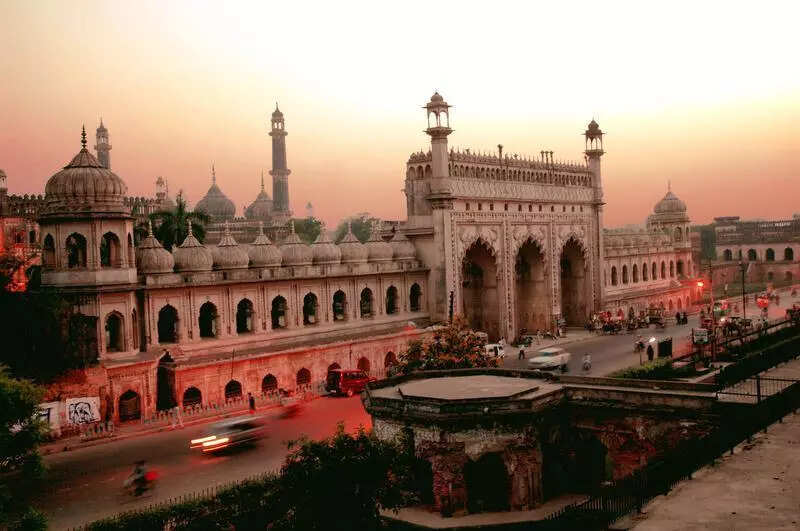
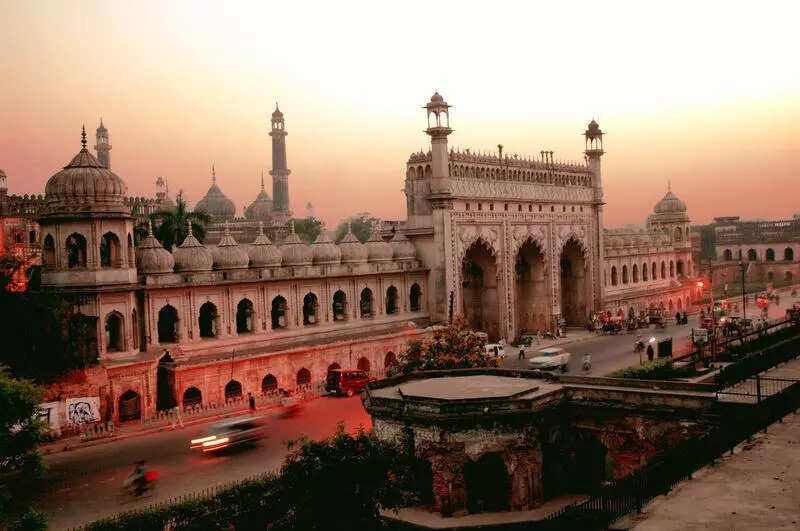
KAL, AAJ, AUR KAL Lucknow as a capital city is longer than empires and older than nations. In its journey towards this envious feat, the city enriched itself with diverse heritages and progressive strides, making the milestone a saga to take pride in and setting a benchmark for future accomplishments.It was the winter of January 1775 when Mirza Yahya was anointed as the new regent of Awadh. His relationship with his mother, the formidable Bahu Begum, was far from warm. From her palatial abode in Faizabad, the Queen Mother continued to command the royal court and the natives alike, while the uneasy nawab remained in his Lucknow residence. As summer approached, the mother-son tension showed no sign of thawing. Frustrated, the nawab finally resolved to blunt the matriarch’s dominance with an administrative coup — shifting the capital from Faizabad to Lucknow under his regency.That marked the birth of Lucknow as the capital seat of Awadh, a status it has retained for 250 years!History would come to know Mirza Yahya more popularly as Nawab Asaf-ud-Daula—the benevolent regent who changed his fate, and that of Lucknow, with a single masterstroke.The semi-quincentennial — 250 years as a capital city — is no mean feat. In that measure, Lucknow as ‘the Capital’ is a year older than the United States, which will mark 250 years of independence next year. The British ruled India for less than 200 years, and Delhi has been the national capital only since 1911. Our city stands taller in that roll of honour.Though Lucknow existed much earlier, it was under Nawab Asaf-ud-Daula (1775–97) that the city truly found a distinct character, a strong foundation, and a legacy that endures to this day. The new capital soon distinguished itself through its vibrant court culture, architectural marvels like the Bada Imambara and Rumi Darwaza, exquisite craftsmanship, flourishing music and poetry, refined etiquette, and a zabaan steeped in elegance.The city blossomed in narrow lanes and mohallas that became repositories of tales and heritage; the fragrance of attar spread through galis and koochas, and dastarkhwans drew food connoisseurs from India and abroad. Two hundred and fifty years is a long span, and histories often get buried or rewritten with the changing times and rulers. But Lucknow’s history has been one of continuity — each phase leading to another, with facts rather than fiction.The Awadhi capital has trekked centuries with grace and poise. Happiness has been a constant alongside progressive strides. A survey recently ranked it the second happiest city in the country. So janab, saying muskaariye ki aap Lucknow mein hain is no hyperbole.Such is the city’s charm that outsiders who settled here soon became Lakhnavis. Be it the British, French, Chinese, or indigenous communities like Kashmiris, Bengalis, Odiyas, South Indians and many others — all took root in Awadhi soil, and the natives embraced them as their own.With a multifaceted citizenry, Lucknow leaped over language barriers early on. Hindi, Urdu and English became the lingua franca of the streets, while Bhojpuri, Awadhi and Bangla enriched its conversations. The range of languages still echoes in cross-cultural gatherings across the town.Few cities adapt to a change of guard without chaos or clamour. Lucknow falls in that league. When the curtains came down on the nawabi era in 1856 and the British took over, Awadh held its own. It was bruised and battered by the English assault but rose like a phoenix—so much so that even the new rulers imbibed its ethos. The city again showed steely resolve when its turf was used by Mahatma Gandhi, Jawaharlal Nehru and countless freedom fighters to send the English packing. In the post-Independence era, Lucknow has scripted many political histories and continues to be a passage to the crown of Delhi.Lucknow takes pride of place among the three icons of Hindu-Muslim syncretic bonding—the other two being Delhi and Hyderabad. This Ganga-Jamuni tehzeeb finds voice in both Bada Mangal festivities and Muharram mourning, where communal harmony stands out as the highest religion. Wajid Ali Shah, the last king of Awadh, introduced the neutral salutation ‘adaab arz hai’ to blur religious lines in everyday greetings. The tradition continues, and to this day the city is known for its adab and adaab.The Awadhi turf has long been a melting pot of past and present. The legacy of 250 years is etched in the lanes and bylanes of Old Lucknow. Aminabad’s Gadbadjhala and Hazratganj’s Love Lane still weave a fascinating aura. So do the new stretches of Gomtinagar and its Extension, adding fresh tales to the Lucknow kaleidoscope. If Hazratganj is the city’s heart, then Shaheed Path is its new artery. Old bazaars like Nakkhas and Nazirabad happily compete with new-age malls — the former steeped in history, the latter an emblem of new Lucknow.The serene Gomti remains an eternal muse. The river may have turned slimmer and pale over the years, but it still binds Cis, Trans and New Lucknow. Once, tongas rode along its banks; today the Metro glides smoothly across it. Soon, it will ferry riders into the snaking yet magical streets of the Old City. The Gomti’s beauty, once captured in still frames, now dazzles in drone shot panoramas. Urban skylines and rising skyscrapers have not dimmed the glimmer and glamour of Shaam-e-Awadh.The sobriquet of ‘traditional city’ befits Lucknow, with its rich legacy of multiple heritages. Yet it is neither alienated from nor obtuse to development. Who would have thought that the land famed for chikankari and kebabs would one day manufacture BrahMos missiles? But that’s our recipe — win friends with cuisine, chase away foes with firepower.Here, tradition and technology go hand in hand. That’s why Lucknow has embraced artificial intelligence and is poised to become India’s first AI city. Yes, you read that right — the first in the country.With centuries of churn, the aroma of kebabs and tikkis has travelled from bylanes to malls, while vegetable biryani now rivals the dum pukht in popularity and sales.Silver Screen, too, has waxed eloquent on Lakhnavi tehzeeb. If Rafi sang paeans with Ye Lucknow ki sar zameen, Arijit Singh took it higher with Suno na sangemarmar. From Umrao Jaan to Shatranj Ke Khiladi and Gadar to Ishqzaade, it has been a Jolly (LLB) good journey on celluloid for Lucknow, which gave Indian cinema gems like Naushad and Madan Mohan.In the age of the metaverse, Lucknow is a real El Dorado — blending pursuits with emotions, eyeing new-age goals while preserving old triumphs. It is, truly, a tradition-to-tech city.Resting on laurels is not an option. The 250th milestone is just another marker in its journey. For Lucknow, even the sky is not the limit.